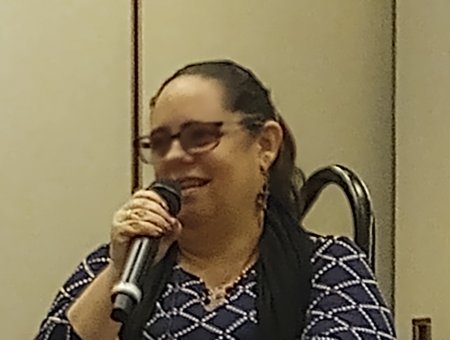
This address was given by Dra. Tanieris Ideguez La O, Deputy Chief of the Cuban Embassy Washington, D.C. to the plenary session of the National Lawyers Guild’s “Law for the People” Convention in Detroit on April 10, 2026
Distinguished members of the National Lawyers Guild, esteemed colleagues:
It is a profound honor to address this plenary session. I bring you not only the greetings of the Cuban people, but also a message of solidarity, resilience, and hope, values that have defined our nation and its legal and social development for decades.
Today, I would like to speak especially to the young lawyers and law students among you. You are entering the legal profession at a time of immense global challenges, growing inequality, threats to sovereignty, climate crises, and the persistent struggle for human dignity. In such a context, the role of law is not neutral. Law is a tool. It can serve power, or it can serve justice. The choice, ultimately, belongs to you.
Cuba’s experience offers a perspective shaped by over six decades of resistance, transformation, and international solidarity. Despite facing extraordinary external pressures, including a prolonged economic blockade, Cuba has sought to construct a legal and social system grounded in principles of equity, social justice, participation, democracy and human dignity.
International solidarity is not an abstract concept for Cuba, it is a lived practice. Cuban doctors, teachers, and professionals of many areas have served in dozens of countries, often in the most vulnerable and underserved communities. This commitment reflects a fundamental belief: that the well-being of one nation cannot be separated from the well-being of humanity as a whole. For legal professionals, this translates into a responsibility to look beyond borders, to advocate for fairness not only within your jurisdictions, but in the entire world, in any place in wich we identify an unjustice, we should be there to oppose it.
One of the most important developments in recent years has been the adoption of Cuba’s 2019 Constitution. This document represents a significant evolution in our legal framework. It was not imposed from above; rather, it was the result of an extensive participatory process involving millions of citizens. Many drafts were discussed in workplaces, neighborhoods, and universities, generating thousands of proposals and modifications. At the end, more than 60% of the first draft was modified as the result of the popular process.
This Constitution reaffirms the socialist character of the Cuban state, while also expanding the recognition of individual rights and guarantees. It strengthens the rule of law and social justice, enhances institutional accountability, and expand the scope of legal concepts such as due process, presumption of innocence, and the protection of personal data. It also recognizes the role of diverse forms of property within the national economy, reflecting a pragmatic approach to contemporary challenges.
But the most important thing is to put the human being in the center with the respect of the human dignity as the main right/ value for the Constitution.
For young legal professionals, there is an important lesson here: democratic processes can take many forms. Participation is not limited to electoral cycles; it can and should be embedded in the very creation of laws. The Cuban experience demonstrates that broad citizen engagement in legal drafting is not only possible, but essential to legitimacy and effectiveness.
Another landmark in Cuba’s legal evolution is the Family Code, a truly innovative piece of legislation that has garnered international attention. This code reflects a deep commitment to social justice and human dignity. It recognizes the diversity of family structures, reaffirms gender equality, protects the rights of children and the elderly, and embraces principles such as affection, solidarity, and co-responsibility as legal foundations.
The Family Code was also subjected to a nationwide consultation and ultimately approved through a popular referendum. This process ensured that the law was not only progressive in content, but also rooted in the will of the people. It stands as an example of how law can evolve to reflect changing social realities while promoting inclusion and respect.
In a world where many legal systems struggle to keep pace with social transformation, Cuba’s approach highlights the importance of adaptability and innovation. Law must not be static; it must respond to the needs and aspirations of society.
At the same time, Cuba is engaged in an ongoing process of updating its legal and economic model. This includes the modernization of commercial law, the strengthening of judicial institutions, and the development of regulatory frameworks to support new forms of economic activity. These efforts aim to enhance efficiency while preserving the core values of social justice and equity.
Dear friends, for those of you beginning your legal careers, this moment calls for courage and imagination. The challenges we face cannot be addressed with outdated tools or conventional thinking. You must be willing to question assumptions, to explore alternative models, and to stand firmly for principles that prioritize human dignity over personal profit.
But let me also speak candidly about the present. Cuba continues to face significant obstacles, many of which are external. The economic blockade imposed by the United States has had profound humanitarian and developmental impacts, affecting every aspect of life on the island. It restricts access to resources, technology, and financial systems, creating hardships that no nation should endure.
In this context, international support is not merely symbolic, it is essential. Legal professionals have a critical role to play in advocating for policies that respect sovereignty, promote dialogue, and uphold international law. Your voices matter, and matter more for Cuban people. Your advocacy can contribute to shaping a more just and equitable global order.
Supporting Cuba today means recognizing its efforts to build a society based on solidarity and inclusion, while also acknowledging the challenges it faces. It means engaging in constructive dialogue, fostering mutual understanding, and opposing measures that harm women, children, elders, a brave and dignify people.
To the young lawyers here, I encourage you to see your profession not only as a career, but as a vocation for justice. The law is a powerful instrument for change. It can protect the vulnerable, challenge injustice, and create pathways toward a more humane world.
Learn from different experiences, including those that may differ from your own. Engage critically, but also with openness. Build bridges rather than walls. And above all, remain committed to the fundamental principle that justice must be accessible to all, not a privilege for the few.
Cuba’s journey is not perfect, and it does not claim to be. But it is a testament to what can be achieved when a society prioritizes collective well-being, human dignity, participatory governance, and international solidarity. It is an invitation to think differently about the role of law in shaping our future.
As you move forward in your careers, remember that you are not only interpreters of the law, you are its architects. The systems you help build will define the lives of generations to come.
Let us work together to ensure that those systems are grounded in fairness, compassion, and respect for human dignity.
Let us work together for a better world, I am sure that it’s possible.
Thank you very much.